
New Roles



The AI Workforce Reckoning: Takeaways from the "New Roles" Panel
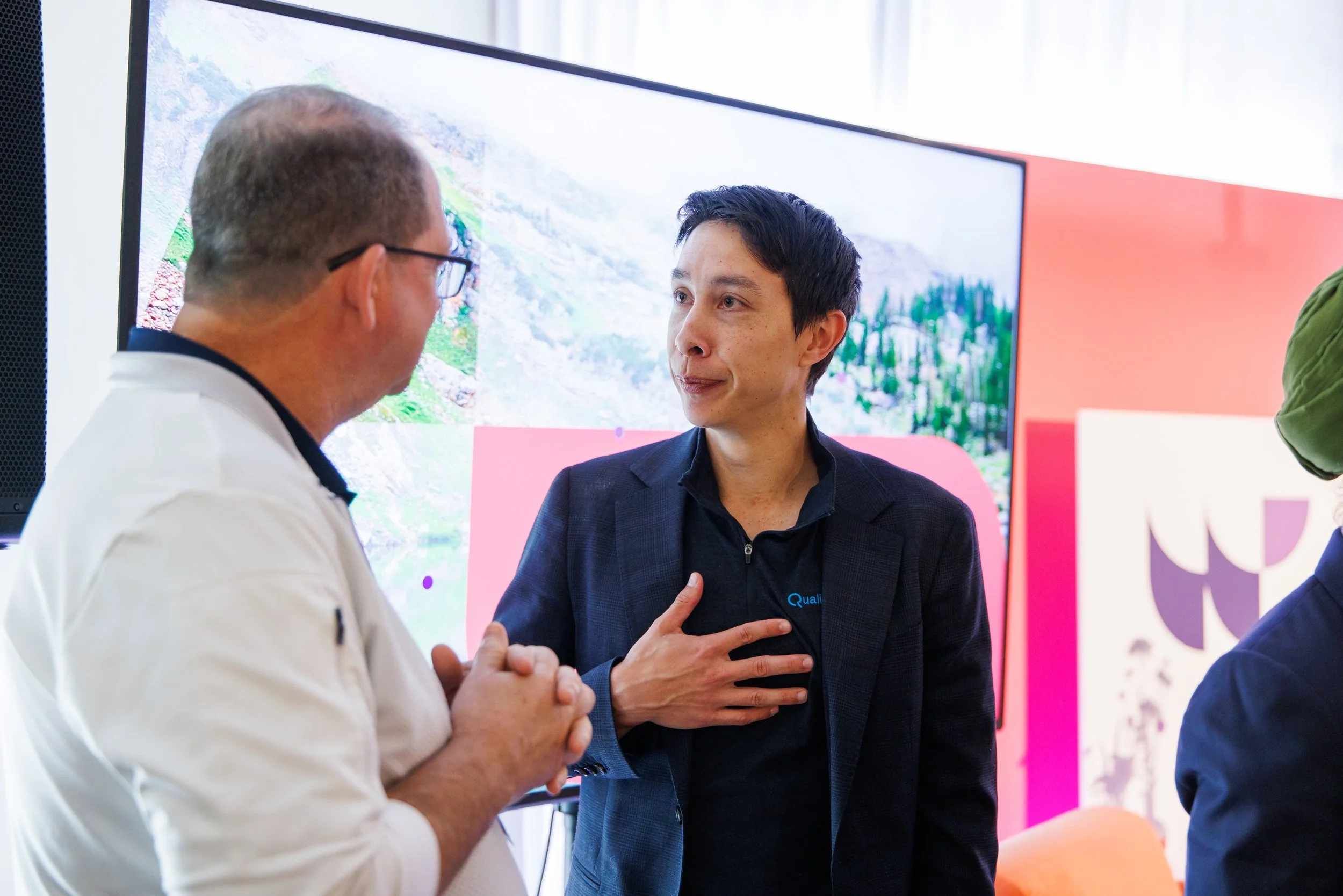
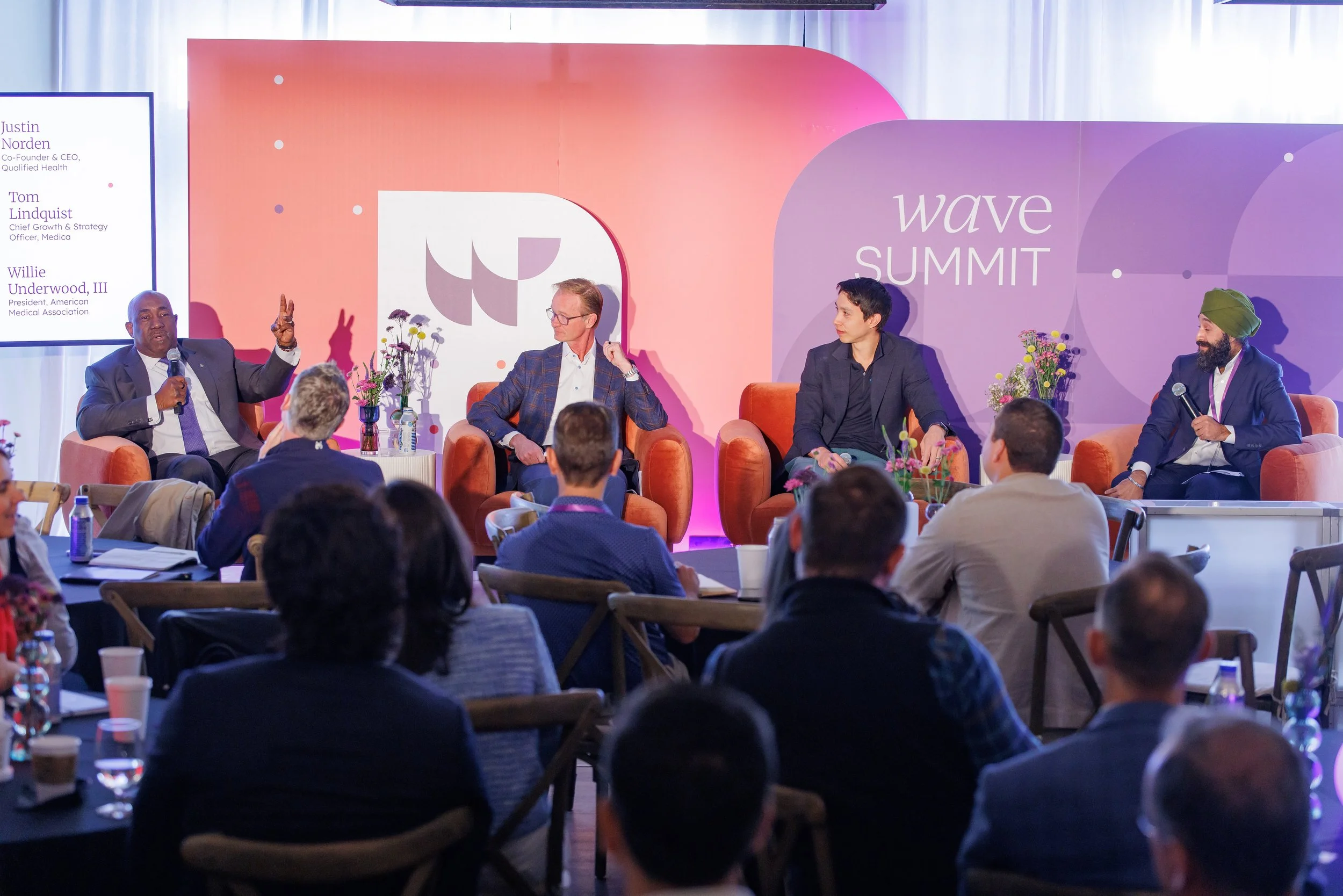
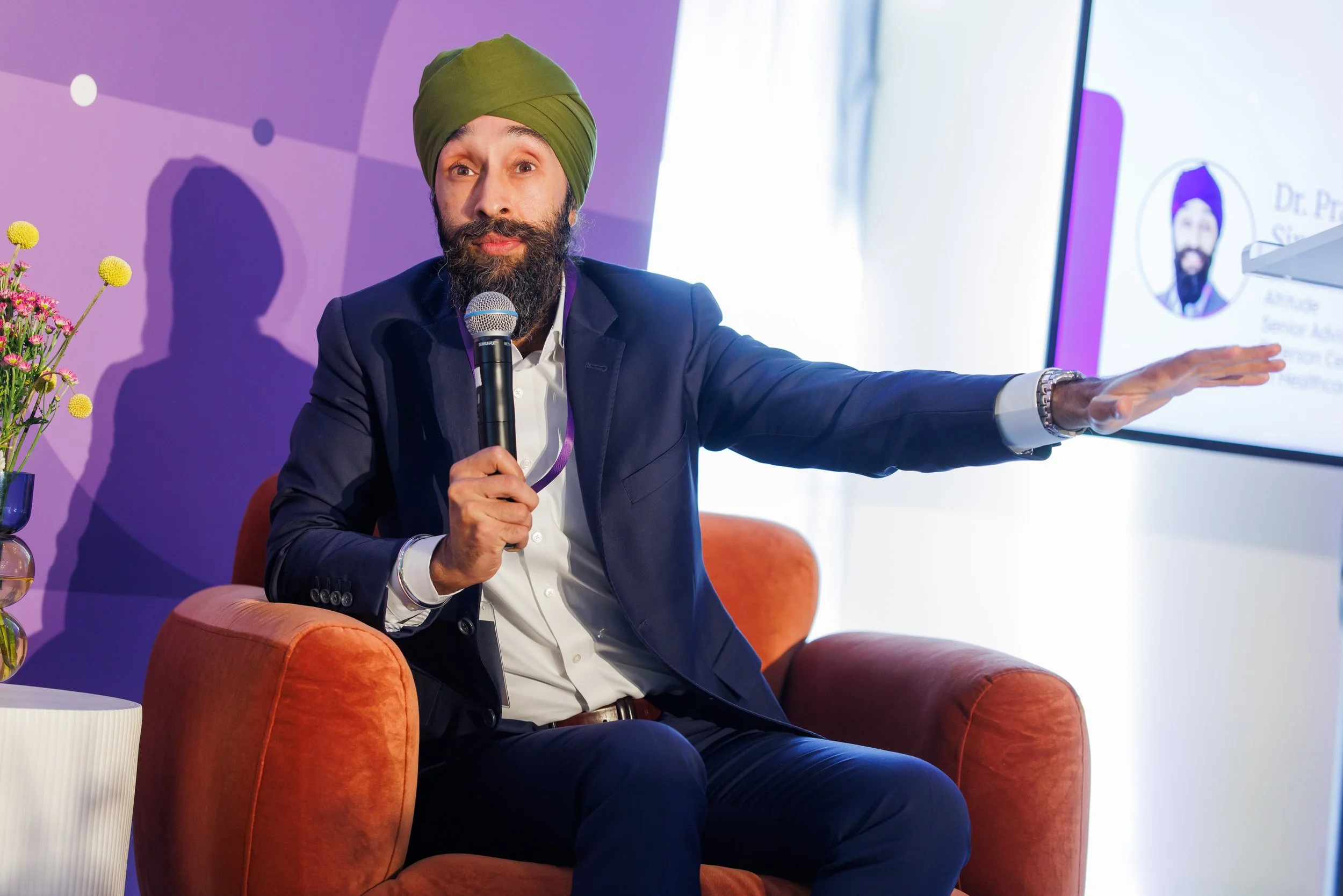
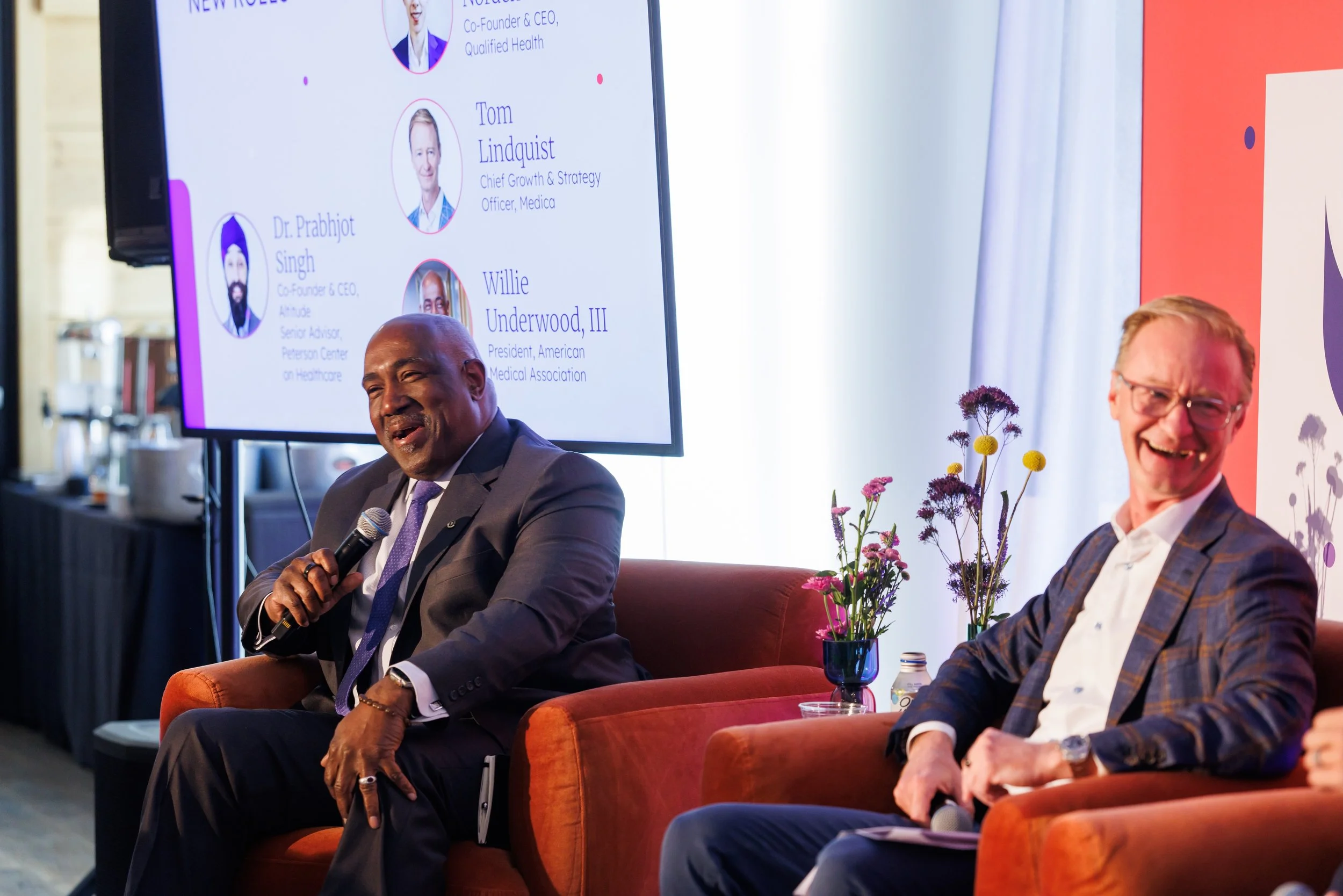
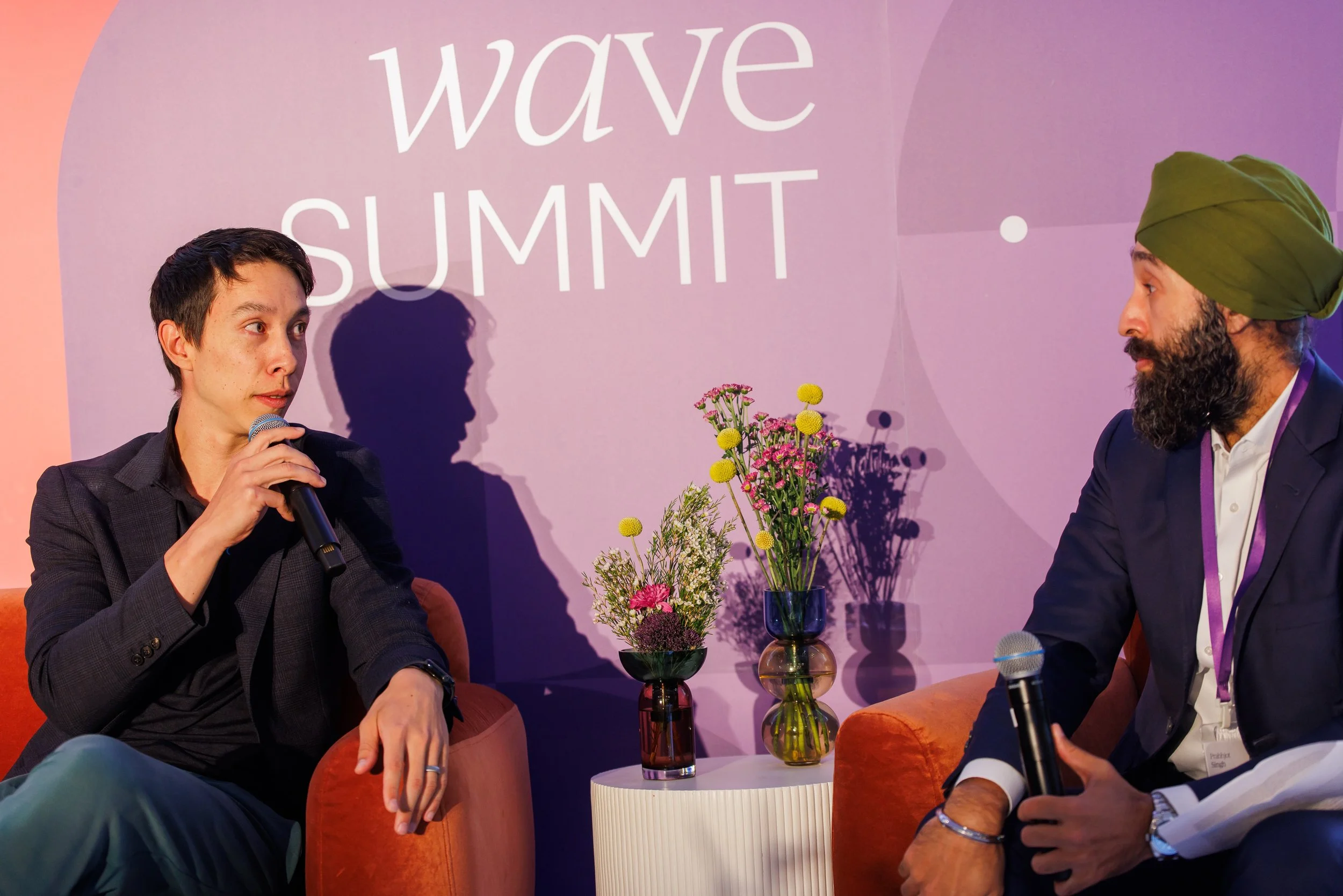
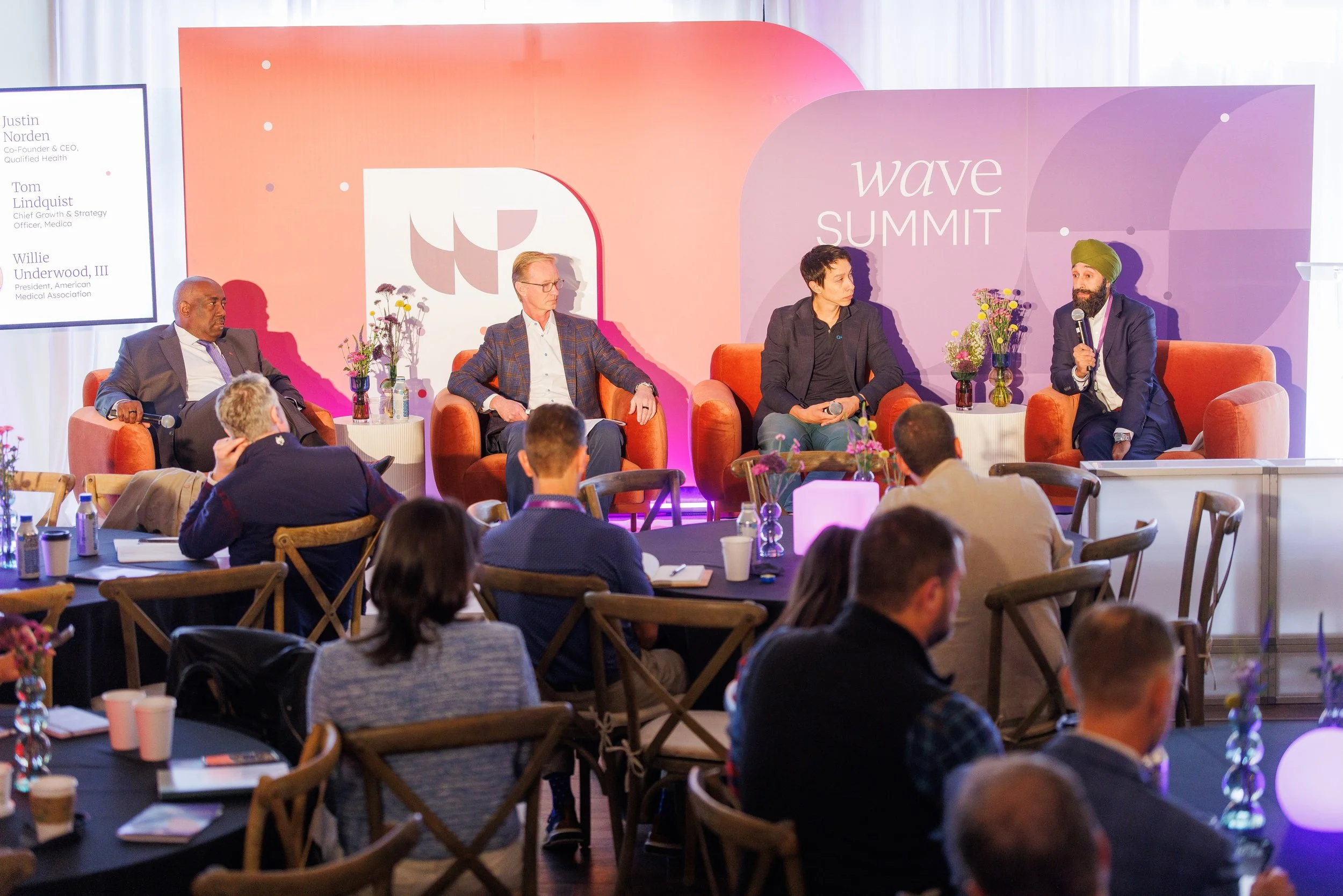
The panel, moderated by Dr. Prabhjot Singh of Altitude and the Peterson Center and joined by Justin Norden, Qualified Health, Tom Lundquist, Medica and Dr Willie Underwood, President of the American Medical Association, opened with a question most AI conversations in healthcare avoid: will this technology make care cheaper, or will it become the latest expensive layer on a system already buckling under its own cost? The honest answer from the stage was uncomfortable. By default, AI will make healthcare more expensive. The panel's real subject was what it would take to stop that from happening, and whose jobs, incentives, and assumptions would have to break along the way.
1. AI's default setting is inflation, and healthcare has seen this before
The Peterson Center's starting point is historical, not speculative. Every major wave of technology in healthcare, from imaging to EHRs, has raised costs without proportionally improving outcomes. New tools get added on top of old workflows, billed separately, and used more often. The system absorbs them as new revenue streams rather than as ways to eliminate work.
The panel argued AI will follow the same path unless three conditions hold. Organizations have to know when and where clinical AI actually works, which means deploying on evidence rather than enthusiasm. The technology has to be deflationary by design, doing more while spending less rather than more of both. And the way clinical work is done has to change, instead of AI being layered on top of existing workflows.
This is the most important reframe from the session. The debate about AI in healthcare is usually treated as a question of capability: can the model read the scan, write the note, answer the patient? The panel treated capability as close to settled and moved the question to economics. A tool that works perfectly and gets billed as an add-on is still inflationary. With healthcare workers and services making up roughly 40% of spend, the real test is not whether AI helps clinicians but whether it changes the cost structure of care. Most current deployments have not been asked to meet that test.
2. "Useful" is not an outcome, and the industry is confusing the two
Justin Norden of Qualified Health offered a statistic that sounds like a triumph and was framed as a warning. Roughly 30% of Americans now use AI to ask health questions, and about 95% of them say it was useful. That's a remarkable adoption curve. It is also, Norden pointed out, not an outcome measure.
Patients finding AI useful tells us nothing about whether they got healthier, whether they avoided unnecessary care, whether they were steered toward care they needed, or whether the system spent less. Satisfaction and outcomes have diverged before in healthcare; patient satisfaction scores famously correlate poorly with clinical quality. The risk is that AI vendors, and the health systems buying from them, will report usefulness, engagement, and time saved while the harder question of whether any of it changes health goes unasked.
The provocation for leaders is simple. If your AI dashboard measures adoption and satisfaction but not outcomes and total cost, you are measuring the wrong things, and you are likely building the inflationary version of AI.
3. If your job is moving data between screens, it is already ending
Norden was blunt about which roles go first: any job whose core function is moving information from one screen to another. AI systems can now operate computer interfaces about as well as people do. That puts the entire layer of low-risk, no-patient-contact administrative work in immediate jeopardy, including data entry, prior authorization shuffling, claims processing, and much of back-office coding.
The panel framed this less as disruption and more as overdue correction. Panelists cited estimates that 20 to 30 cents of every healthcare dollar is administrative waste, and that 40 to 50% of physicians are experiencing burnout driven largely by administrative burden. Russ Branzell, CEO of CHIME, went further, suggesting that 60 to 75% of the work in digital health organizations could be automated.
There's a harder implication here that deserves to be said directly. A meaningful share of healthcare employment exists because the system is complicated, not because complication serves patients. Those jobs are real, the people in them are real, and many live in communities where a hospital or payer is the largest employer. Taking the 20 to 30 cents of waste out of the system means taking out the jobs that the waste pays for. Any leader who talks about eliminating administrative waste without a plan for the workforce attached to it is only telling half the story.
4. AI will expose coding games, and some organizations should be nervous
One of the sharpest data points in the discussion concerned office visit intensity. Between 2022 and 2025, the split between low- and high-complexity visits reportedly shifted from roughly 50/50 to about 60% high intensity, without a corresponding change in the underlying patient population.
The panel's interpretation was pointed: coding behavior is being optimized to increase reimbursement, and AI is part of why. Ambient scribes and documentation tools capture more detail, and more detail supports higher-level codes. The same technology sold as relief from burnout is also functioning as a revenue-capture engine.
The twist is that AI cuts both ways. Payers can deploy the same class of tools to audit claims at a scale no human review team could match. The coming dynamic looks like an arms race: provider AI documenting upward, payer AI auditing downward, and both sides spending money on software to fight over the same dollar. That is the inflationary scenario in its purest form, and it is already underway. Organizations whose margins quietly depend on documentation intensity should assume that advantage has a short shelf life.
5. The easy visits are leaving, and the ones left will be brutal
This may be the most underappreciated insight from the panel. Norden described what happens when AI handles triage, preparation, and simple questions well. Straightforward needs get resolved before a patient ever sees a physician, through AI tools, retail clinics, or virtual-first providers. He pointed to Stanford Medicine, where he said acuity is at historic highs as simpler visits move to places like One Medical or get answered through AI.
On paper this is the dream of top-of-license practice. Every visit is fully prepared, labs reviewed, imaging interpreted, follow-ups confirmed, and the physician spends time only on the problems that truly need a physician. In practice, it means every encounter is hard. The easy visits used to function as cognitive breathing room during a clinical day. Remove them and the physician's schedule becomes an unbroken sequence of complex, high-stakes, judgment-heavy cases.
Norden acknowledged the implication directly: a day of nothing but hard visits may produce a new form of burnout. The profession could trade administrative exhaustion for cognitive exhaustion. Staffing ratios, visit lengths, training pipelines, and compensation models were all built around a mix of easy and hard encounters, and none of them have adjusted. If AI succeeds at its stated goal, it may break the clinical workload model it was supposed to fix.
6. AI gave doctors their evenings back, and that matters more than it sounds
Dr. Willie Underwood of the AMA grounded the discussion in something concrete. The physician's workday was nominally 8 to 5, but with "pajama time" spent finishing notes and inbox work, it often ran until 10 at night. Many physicians, he said, missed dinner with their families for years.
AI scribes are among the first tools to change that in a way physicians actually feel. It's worth taking seriously as more than an anecdote, because the panel also cited reports that up to half of medical students at Stanford are uninterested in clinical practice, largely because of the administrative load they see ahead of them. The pipeline problem and the burnout problem are the same problem. If AI can make clinical medicine a humane job again, it addresses workforce supply in a way no recruiting incentive can.
The tension is that this benefit sits right next to the coding intensity issue in takeaway 4 and the cognitive load issue in takeaway 5. The same scribe that gives a doctor their evening back may also raise the bill and fill tomorrow with harder cases. The technology does not decide which of those effects dominates. Leadership and payment design do.
7. The new roles are hybrids, and there are not nearly enough people to fill them
The panel identified several roles emerging to fill the space AI creates.
The AI transformation lead, sometimes called a forward-deployed engineer, sits between technology and the clinical floor. This person documents how work actually happens on a unit, drives change management, and implements AI where the work is done. It requires both clinical fluency and technical literacy, a combination that is rare today. Anthropic and OpenAI are partnering with health systems on this model, and health systems are starting to hire for it, but supply is far behind demand.
The AI monitor or validator is paid specifically to verify that AI tools do what they claim. This is not generic IT or compliance work; it requires enough clinical knowledge to judge whether an output is right. As regulatory and institutional accountability grows, the panel expects this to become a standard function in larger systems and payers.
The health plan futurist or strategist shifts payer attention away from provider contracting and network management toward integrating technology across a member's whole care journey. That shift is being accelerated by individual-choice models such as ICHRA, which force plans to ask what their value proposition is when members choose for themselves.
The common thread is that none of these roles are purely clinical or purely technical. Healthcare's education and credentialing system produces specialists in one lane. The jobs being created require people who can operate in two or three lanes at once. The organizations that grow this talent internally, by giving curious nurses, pharmacists, and physicians technical training and real authority, will move faster than those waiting for the market to supply it.
8. AI makes the invisible nurse visible, and that changes management
One quieter but powerful idea was workflow telemetry. AI systems make organizational behavior observable at scale for the first time. Every hospital has a nurse on some unit who has quietly figured out a better way to handle discharges, or a clinic that has cut no-shows through an informal process nobody else knows about. Historically, that innovation stayed local and died when the person left.
When AI instruments workflows, those hidden improvements become visible and replicable. The panel urged leaders to treat this data as a strategic asset rather than an operational byproduct.
The provocative edge is that the same visibility that surfaces hidden excellence also surfaces hidden underperformance, workarounds, and variation that leaders may not want to see. Workflow telemetry is a management tool, and it can easily become a surveillance tool. How organizations handle that line, and whether frontline staff see telemetry as recognition or as monitoring, will shape whether it produces innovation or resentment.
9. "Know the form to break the form"
The panel's recurring leadership message was that you cannot redesign what you do not understand. AI implementations that ignore the logic of existing workflows either fail quietly or cause harm. Many workflows that look irrational from a boardroom exist for reasons that are only visible on the unit: a safety check born from a past error, a workaround for a broken system, a relationship that keeps patients from falling through the cracks.
This cuts against a common pattern in which executives buy an AI tool, hand it to IT, and expect transformation. Branzell argued that leaders themselves need retooling, because the industry is "playing a new game with old rules." The change management is as much the product as the technology. Organizations that treat implementation as installation will get the inflationary version of AI; those that treat it as work redesign have a chance at the deflationary one.
10. The subsidy cliff is coming
One of the most practical warnings in the session was about price. Current AI pricing in healthcare is, according to the panel, being underwritten by venture capital and private equity at below-market rates. The analogy was Uber: rides were cheap while investors funded growth, and prices rose once the market was captured and the subsidy ended.
Health systems that build clinical and operational dependencies on today's AI pricing, without modeling what happens when prices normalize, are taking on serious budget risk. Once a workforce has been restructured around AI, once the scribes are embedded and the administrative staff have been reduced, the system has little leverage when the vendor raises prices. The recommendation was straightforward: model AI costs at market rates before committing to dependencies. The less obvious implication is that AI cost savings calculated at current prices may be overstated, and some of the "deflationary" business cases being presented today will not survive the subsidy ending.
11. Payment is the root problem, and nobody has defined what we are paying for
Several panelists converged on a structural diagnosis: every major payment reform has moved money between parties, but none has clearly defined the outcomes it wanted first. Providers chase payment incentives rather than outcome targets because that is what the system rewards. That is rational behavior inside a badly designed system.
Tom Linquist of Medica described how AI changes the basic shape of care. For fifty years, the model was that a patient sees a provider, who generates a claim. Increasingly, a patient interacts with AI first, which routes to a care team, which escalates when needed. That raises questions the current system cannot answer. Who bears clinical responsibility for the AI's part of the encounter? What counts as a billable provider interaction? How do credentialing frameworks built for individual human practitioners handle care delivered by a human-AI team?
Linquist framed this as an opening: there is significant opportunity right now to help shape how government defines a provider in an AI era. Until that definition changes, AI-augmented care will be underpaid, misbilled, or forced into billing categories that don't fit it. The panel's own unresolved question was how payment and credentialing can change fast enough to keep pace with AI capability. No one offered an answer.
12. The scope-of-practice war is the wrong fight
Asked whether nurse practitioners and physician assistants can achieve outcomes comparable to physicians, Dr. Underwood rejected the premise of the debate. He said the healthcare system has failed at defining roles because it keeps fighting over scope of practice. Those battles are proxy wars that distract from the real question.
His proposed order of operations was to define the desired outcome for a patient population first, then determine the most effective and efficient way to deliver it, and only then decide who does what and with what tools. If NPs and PAs working within well-designed processes improve outcomes, everyone should want that. He was equally clear that this does not extend to high-acuity cases or complex surgery.
He compared it to a football team, where every player knows their position and executes it; nobody improvises their role mid-game. Clarity enables coordination, and ambiguity creates friction and error. AI introduces new players onto the field whose positions have not been defined in most organizations. The scope-of-practice fight is about to get a new contestant, and the old arguments about who is qualified to do what will look quaint next to the question of what an AI is permitted to do.
It is worth noting the tension in Underwood's framing: an outcomes-first, role-agnostic approach sits somewhat uneasily with the AMA's long history of defending physician scope. Whether organized medicine applies that principle when outcomes data favors non-physician or AI-augmented models will be a real test.
13. The two-tier AI future is the default, not a risk
Underwood also raised the issue most AI discussions skip. The conversation assumes access to capital, technical talent, and organizational capacity. Most hospitals, especially rural and safety-net institutions, have none of the three. The example given was Elmira, New York, a small hospital that cannot recruit or retain specialized clinical talent and cannot afford the implementation or ongoing licensing costs of enterprise AI.
The consequence is a system where well-resourced academic centers pull further ahead while the hospitals serving the most vulnerable populations fall further behind. The panel made a point that deserves emphasis: this isn't only an equity argument. If AI's gains are concentrated in the systems that already have the most resources, it will not bend the national cost curve, because the costs are spread everywhere.
Underwood's framing was moral as well as economic: technology has to reach rural hospitals so that patients everywhere are treated as equally valuable. But the panel had no mechanism to offer. Subsidized licensing, federal mandates, and shared infrastructure were all floated as possibilities, and none were resolved. Given the subsidy cliff in takeaway 10, the situation may get worse before it improves, since the hospitals least able to absorb price increases are the ones that will feel them most.
14. The panel disagreed about whether we need policy change at all
A productive tension ran underneath the discussion. Linquist and others emphasized that payment and credentialing reform are prerequisites for AI-augmented care to work. Norden took a sharper position: technology determines what is possible, but leadership determines what happens. He argued that the system, running on roughly 2% margins, cannot be fixed without being taken apart, but that it does not need sweeping payment or regulatory reform to begin. The technology and leadership capacity exist now.
Those positions aren't fully compatible, and the gap between them matters. If Norden is right, the constraint is organizational courage, and leaders waiting on Washington are making excuses. If the payment-first camp is right, individual leaders can only go so far before misaligned incentives pull their organizations back toward the inflationary path. The truth is probably that both are partly right, and that the leaders who move first will be the ones who shape the policy everyone else waits for.
15. Decide who you are willing to make angry
The panel's closing leadership message was the most provocative of all. Meaningful change in healthcare requires displacing entrenched interests, and leaders who avoid that will not drive real transformation. Every takeaway above implies someone losing something: administrative staff losing jobs, organizations losing coding revenue, specialties losing scope protections, vendors losing subsidized growth, payers losing network-based business models.
The deflationary version of AI in healthcare is not a version where everyone wins. It is a version where the 20 to 30 cents of waste stops being someone's income. Dr. Singh's own closing view was that prices will likely rise with AI, which is a sobering conclusion from the moderator of a panel about how to prevent exactly that. The technology is ready. The open question is whether healthcare's leaders are willing to take the political, financial, and human costs of using it to shrink the system instead of expanding it.
